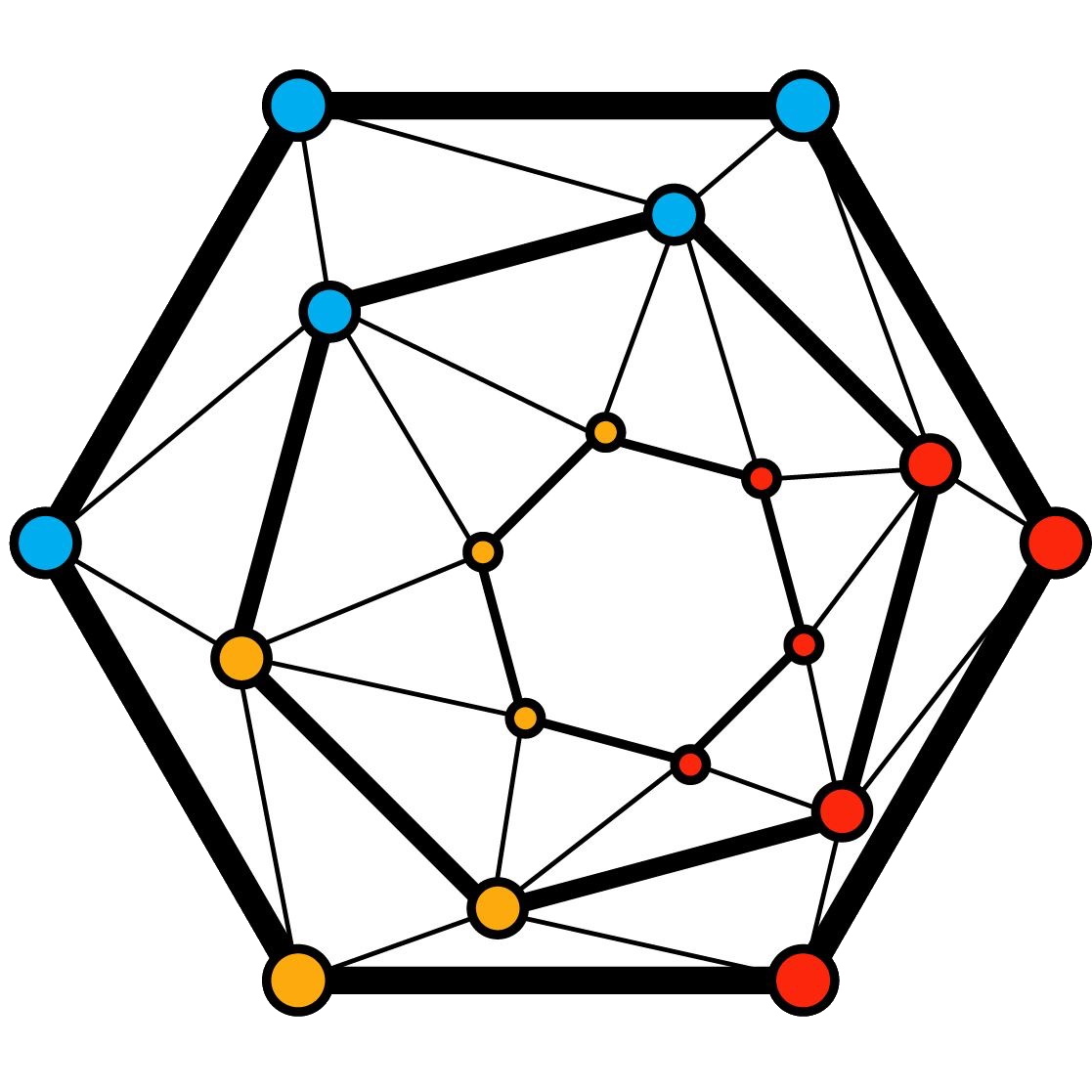
Select an evaluated model and an explicit fallback path.
Enterprise practice
AI & Agentic Systems
AI experiments are not becoming dependable production systems. Models may perform in isolation while the surrounding workflow lacks reliable context, permissions, evaluation, and human control.
When organizations bring us in
The commercial trigger
A model, copilot, or agent must operate inside a material business or regulated workflow, and its decisions must be observable, bounded, and recoverable.
Who owns the problem
Accountable technology leadership
Technology, product, and data leaders moving AI from demonstration into accountable production use.
What we engineer
Production AI applications and agentic workflows connected to real enterprise systems.
Agent and tool orchestration
Retrieval and enterprise knowledge pipelines
Model routing and structured outputs
Human review, escalation, and override paths
Evaluation, tracing, and production observability
Identity, permissions, and workflow integration
What makes it difficult
Consequence changes the technical work.
The hard part is rarely the model call. Reliability depends on changing data, nondeterministic behavior, tool failures, authorization boundaries, latency, cost, and knowing when the system should stop and ask a person.
How we approach it
Architecture through controlled release.
- Define decision boundaries and failure modes before selecting models
- Build evaluations around representative tasks, edge cases, and unsafe behavior
- Integrate tools through explicit contracts and least-privilege access
- Release with observable controls, human escalation, and rollback paths
Production AI X-Ray
The model is not the production system.
Reveal the engineering layers that turn model capability into bounded, observable workflow behavior.
Ground work in approved, versioned sources.
Authorize data and tools for the purpose of the request.
Gate behavior against quality, policy, and safety cases.
Degrade safely when a model or dependency fails.
Stop and route material exceptions to an accountable person.
Trace latency, cost, errors, and task outcomes.
Retain reviewable decisions, versions, and approvals.
Restore a known release when evidence crosses a threshold.
Buyer context
What has to be true before this investment works.
Buyers arrive after a useful model demonstration stalls at the boundary between language and accountable action. The production question is not whether a model can answer. It is whether the complete workflow can use tools and enterprise data without exceeding authority, hiding failure, or leaving operators unable to intervene.
Problems behind the search
Visible symptoms, technical causes, and the decision to make.
The agent works only on the happy path
- What the buyer sees
- Tool calls loop, missing context produces confident answers, and unusual cases fall into an unowned queue.
- What causes it
- The prototype encoded a conversation, not a stateful workflow with typed tools, terminal states, and exception ownership.
- What to evaluate
- Evaluate the workflow state model, tool contracts, stop conditions, and the exact point where a person assumes control.
Permissions exist outside the execution path
- What the buyer sees
- A user can ask the agent to retrieve or change data that the underlying application would normally restrict.
- What causes it
- Prompts are being used as access control, or service credentials collapse the user and agent identities into one broad role.
- What to evaluate
- Require authorization at retrieval and action time, scoped credentials, purpose-aware policy, and denial tests.
Nobody can prove that an update is safer
- What the buyer sees
- Model, prompt, retrieval, or tool changes ship after anecdotal review and production regressions appear later.
- What causes it
- There is no representative evaluation set, version lineage, or release threshold tied to task and safety outcomes.
- What to evaluate
- Inspect evaluation coverage, versioning, shadow tests, rollback triggers, and ownership for failed evaluations.
Architecture depth
The design decisions underneath the outcome.
Agent or deterministic workflow
Use deterministic orchestration when states and rules are knowable. Introduce an agent where the work requires interpretation, planning, or variable tool selection, while keeping irreversible actions behind explicit policy and approval.
Context, memory, and grounding
Separate short-lived task state from durable memory. Retrieval should preserve source identity, freshness, entitlements, and citations; memory writes need purpose, retention, and deletion rules.
Tools, MCP, and authorization
MCP can standardize how tools expose capabilities, but it does not create a security boundary by itself. Each tool still needs typed inputs, least privilege, policy checks, idempotency, timeouts, and reviewable results.
Routing, fallback, and observability
Route models by task risk, capability, latency, residency, and cost. Trace model input lineage, retrieval, tool decisions, approvals, outcome, and fallback without copying unnecessary sensitive content into telemetry.
Material use cases
Where the system fits, and where people remain accountable.
Clinical document intake
Classify incoming material, extract bounded fields, identify missing evidence, and route the packet into the existing clinical or administrative queue.
Human accountability. A clinician or authorized operator owns clinical interpretation and exceptions.
Engineering constraints. PHI access, source provenance, document quality, hallucinated fields, and integration with the system of record.
Regulatory evidence collection
Locate control evidence across approved systems, assemble a review packet, and flag stale or conflicting artifacts.
Human accountability. Control owners attest sufficiency and auditors determine acceptance.
Engineering constraints. Evidence freshness, authorization boundaries, immutable provenance, and avoiding unsupported compliance conclusions.
Security investigation assistance
Correlate alerts and approved telemetry, propose investigation steps, and execute low-risk queries through bounded tools.
Human accountability. Responders own containment and consequential actions.
Engineering constraints. Hostile log content, tool misuse, incomplete telemetry, urgency, and preservation of investigative evidence.
Implementation sequence
From system truth to an operated release.
- 01
Model workflow state
Trace decisions, terminal states, reversible actions, exceptions, and the moments that require accountable human judgment.
- 02
Design tool contracts
Give every tool typed inputs, bounded authority, idempotency rules, timeouts, and an explicit denial response.
- 03
Propagate identity and retrieval authority
Carry user identity and purpose through retrieval and action instead of inheriting a broad service-account view.
- 04
Build the evaluation corpus
Represent routine work, edge cases, hostile content, denied requests, and known failure histories with release thresholds.
- 05
Test denial and escalation paths
Prove that prohibited actions stop, ambiguous work reaches the right reviewer, and interrupted work can resume safely.
- 06
Shadow, stage, and roll out
Compare agent decisions with the current workflow before progressively enabling bounded actions and rehearsed rollback.
Failure modes
How production breaks, and what the architecture must do next.
Prompt injection through retrieved content
Signal. Instructions embedded in documents alter tool selection or disclosure behavior.
Architecture response. Treat retrieved text as untrusted data, isolate instructions, enforce tool policy outside the model, and test adversarial corpora.
Runaway action or cost
Signal. Repeated planning, retries, or tool calls consume budget without advancing the task.
Architecture response. Apply step, time, token, and spend budgets with circuit breakers and an explicit incomplete outcome.
Authorization mismatch
Signal. The agent can see or act beyond the requesting user or stated purpose.
Architecture response. Propagate identity and purpose to every retrieval and tool call, deny by default, and record policy decisions.
Dependency or model failure
Signal. Latency, refusals, schema drift, or provider outage makes the workflow unreliable.
Architecture response. Use typed validation, bounded retry, model or deterministic fallback, durable state, and safe human takeover.
Buyer evaluation
Questions to resolve before selecting an approach.
- Can the workflow be deterministic instead of agentic?
- Which actions are reversible, approval-gated, or prohibited?
- How are user identity and purpose enforced at every tool?
- What evaluation blocks a model, prompt, data, or tool release?
- How does an operator inspect, stop, resume, and roll back work?
Buyer questions
Frequently asked before an engineering engagement.
When should an AI workflow use an agent instead of deterministic automation?
Use an agent when the workflow genuinely requires interpretation or variable planning. Keep known rules, financial calculations, permission checks, and irreversible actions deterministic. Many dependable systems combine an agent for analysis with a state machine for execution.
How do you prevent an agent from using a tool it should not access?
Do not rely on the prompt. Authenticate the user and workload, issue narrowly scoped credentials, authorize each action against policy and current resource state, validate typed inputs, and test denied paths. The tool must reject an unauthorized call even if the model requests it.
Does MCP make an agent secure?
No. MCP provides an integration protocol. Security still depends on server trust, authentication, authorization, data minimization, input and output validation, network controls, and how the host exposes each capability.
Can agents run in a private cloud or VPC?
Yes. Models, retrieval, orchestration, and tools can be placed in public, private, hybrid, or sovereign environments. The choice follows data residency, latency, provider capability, operating maturity, and the actual control boundary.
Continue the technical investigation
Related services, practices, knowledge, and proof.
Evidence publication standard
How public outcome claims are reviewed before publication.
Explore this resource →Agentic AI Engineering
Commercial delivery for a bounded agent workflow.
Explore this resource →AI Security & Governance
Runtime authorization, evaluation, and risk controls.
Explore this resource →Model Context Protocol
Technical background on MCP integration.
Explore this resource →Engineering depth
Decisions, controls, and failure modes.
Architecture decisions
- Choose model and tool boundaries from the workflow risk, not a demo benchmark.
- Keep retrieval, orchestration, authorization, and action execution independently observable.
- Design an explicit path for abstention, human review, and safe degradation.
Operating controls
- Version prompts, models, datasets, policies, and tool contracts together.
- Measure task outcomes and unsafe behavior with representative evaluations.
- Trace every material action to its inputs, permissions, and approval state.
Failure modes we plan for
- Retrieved context is stale, incomplete, or malicious.
- A model or dependency changes behavior without warning.
- An agent exceeds its intended authority or cannot complete a tool action.
Concrete outputs
Artifacts teams can build, operate, and govern.
Agent and tool architecture
Evaluation and observability harnesses
RAG and knowledge pipelines
Production integration and release controls
Priority applications
Where this practice carries particular consequence.
Healthcare & Life Sciences
Clinical support and operational workflows with accountable human decisions.
Explore industry →Financial Services & Insurance
Decision support and reviewable customer operations.
Explore industry →Legal & Professional Services
Knowledge work with confidentiality and review boundaries.
Explore industry →Related engineering depth
Explore the underlying capabilities.
Related architecture and technical context
Next step
Bring us the system, constraint, and consequence.
An engineer will assess the technical fit and the next useful decision.